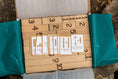
21 beechwood blocks and 20 flashcards, each block sized to its number
5.0
Rated 5.0 out of 5 stars
33 Reviews
Regular price
$69
Regular price
Sale price
$69
Save
$-69 (%)
Unit price
/ per
Free shippingShips in 1 business day
Weekend price
off ends Sunday
Sale ends in 1 day 2 hours 57 minutes01Days02Hrs57Min12Sec
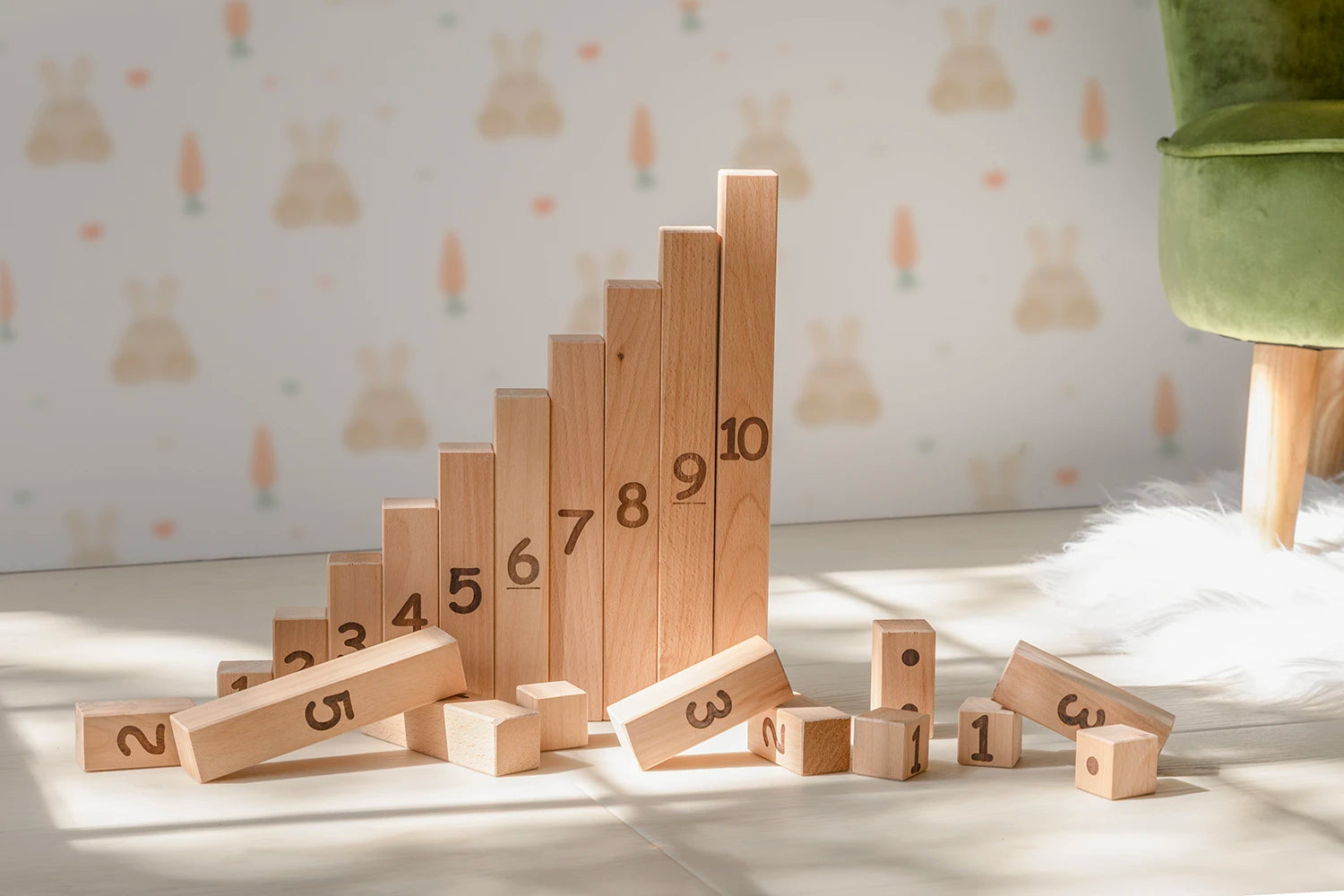
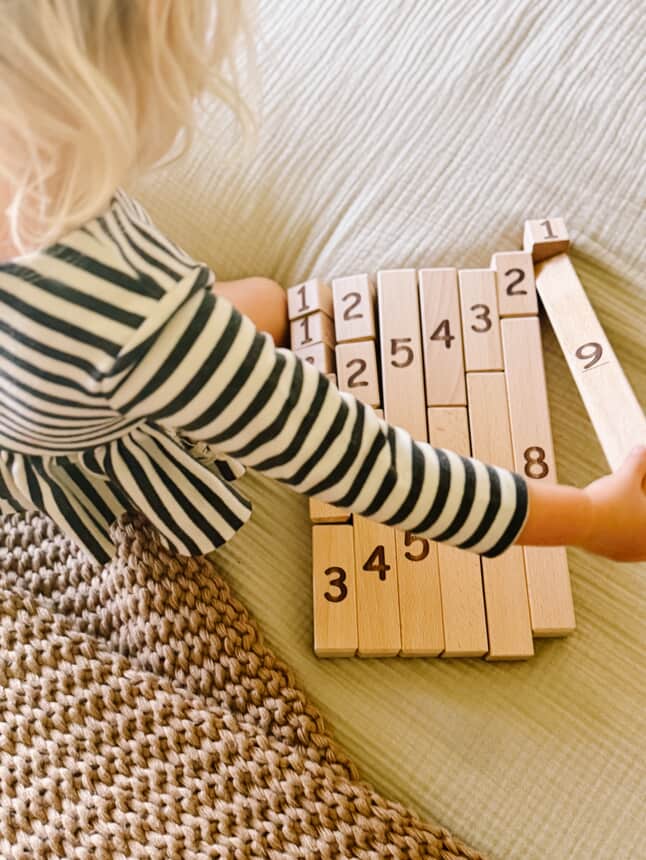
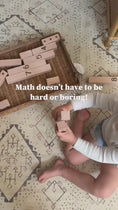
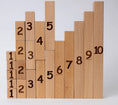
Reach & Count is a set of wooden number blocks and flashcards made to help children not just learn numbers, but understand them. Each block is solid beechwood, sized to its number, so a child can see and feel what "three" means next to "one" or "five", and discover that 2 + 3 stacks to the height of 5.
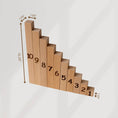
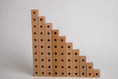
21 blocks, sized to their number: Five ones, four twos, three threes, two fours, two fives and one each of six to ten.
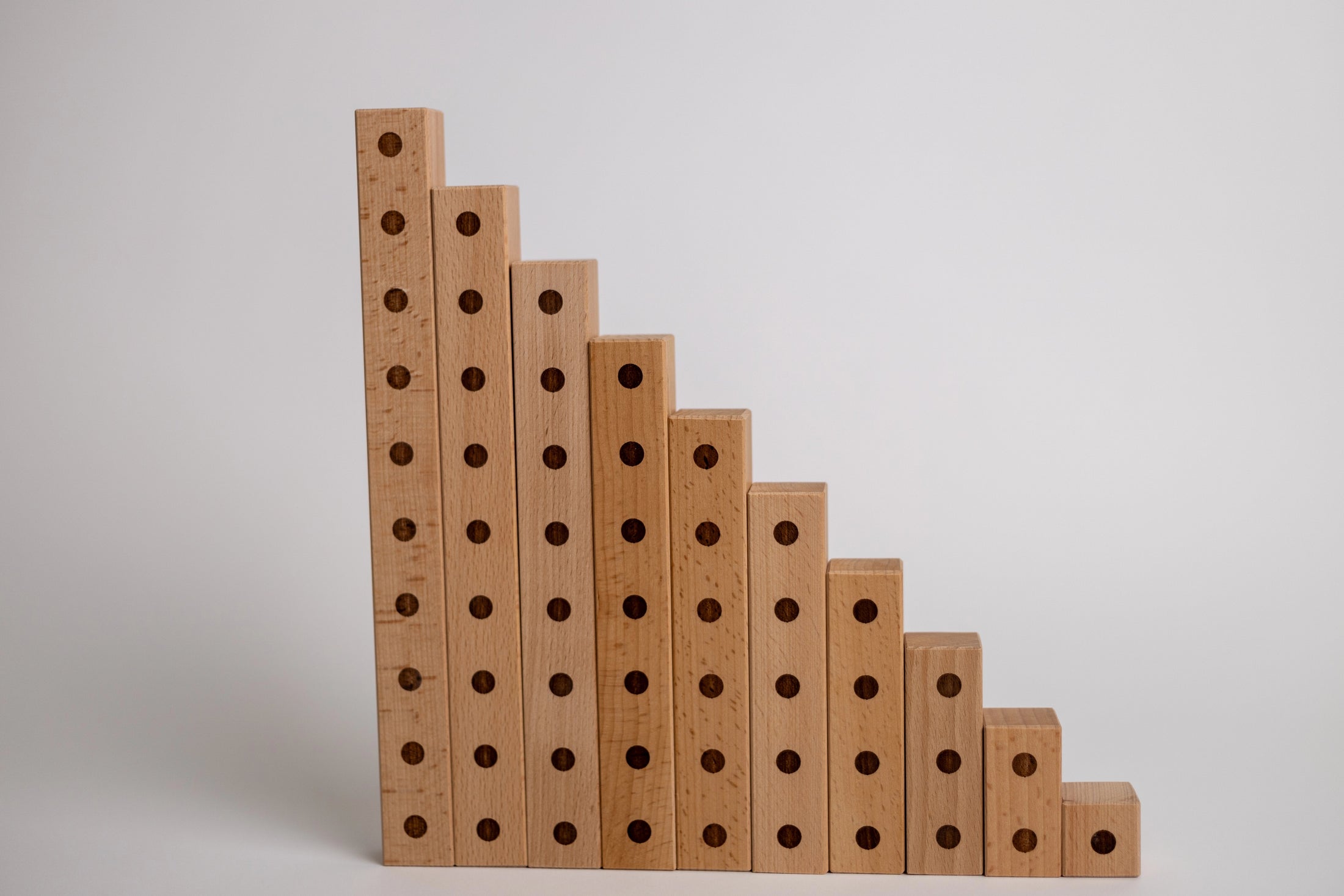
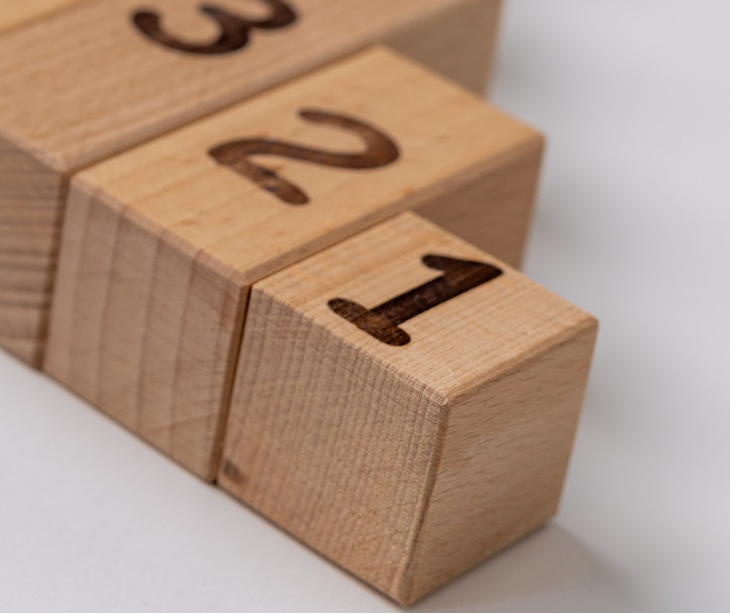
Engraved, not printed: A numeral on the front and counting dots on the back, laser-engraved so they can be traced and won't wear off.
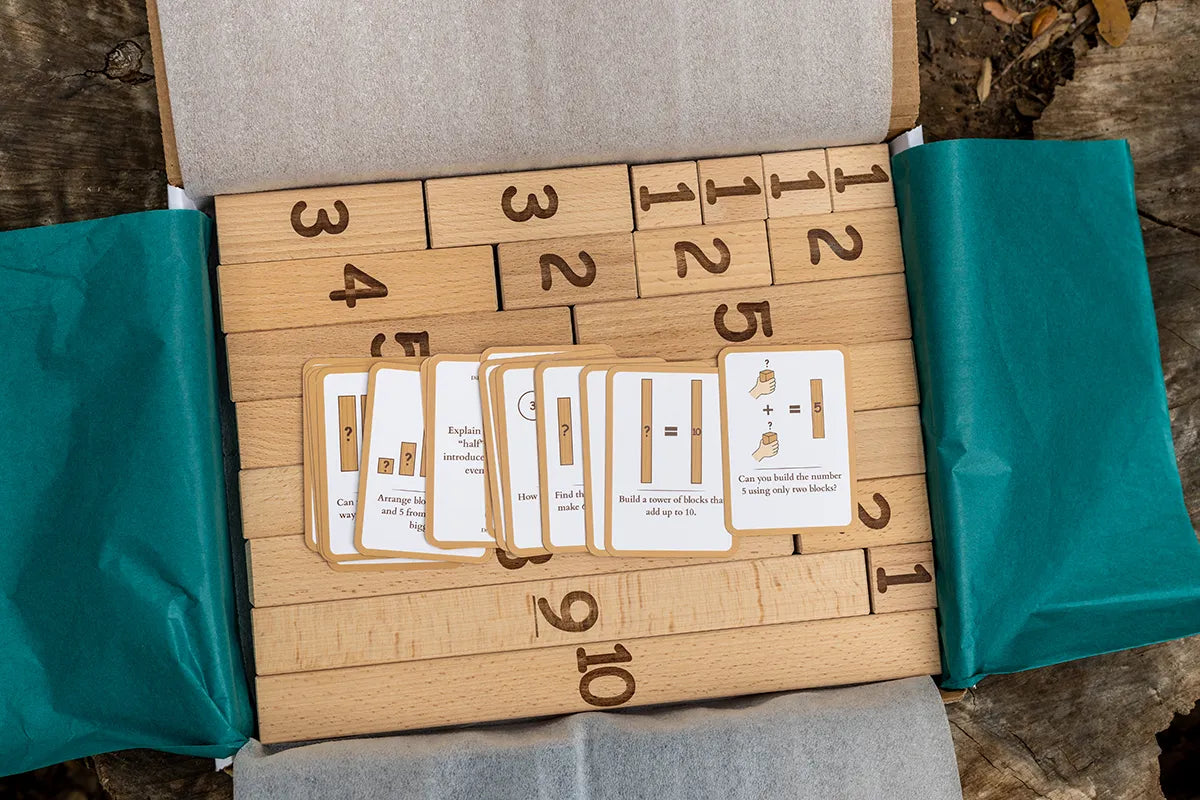
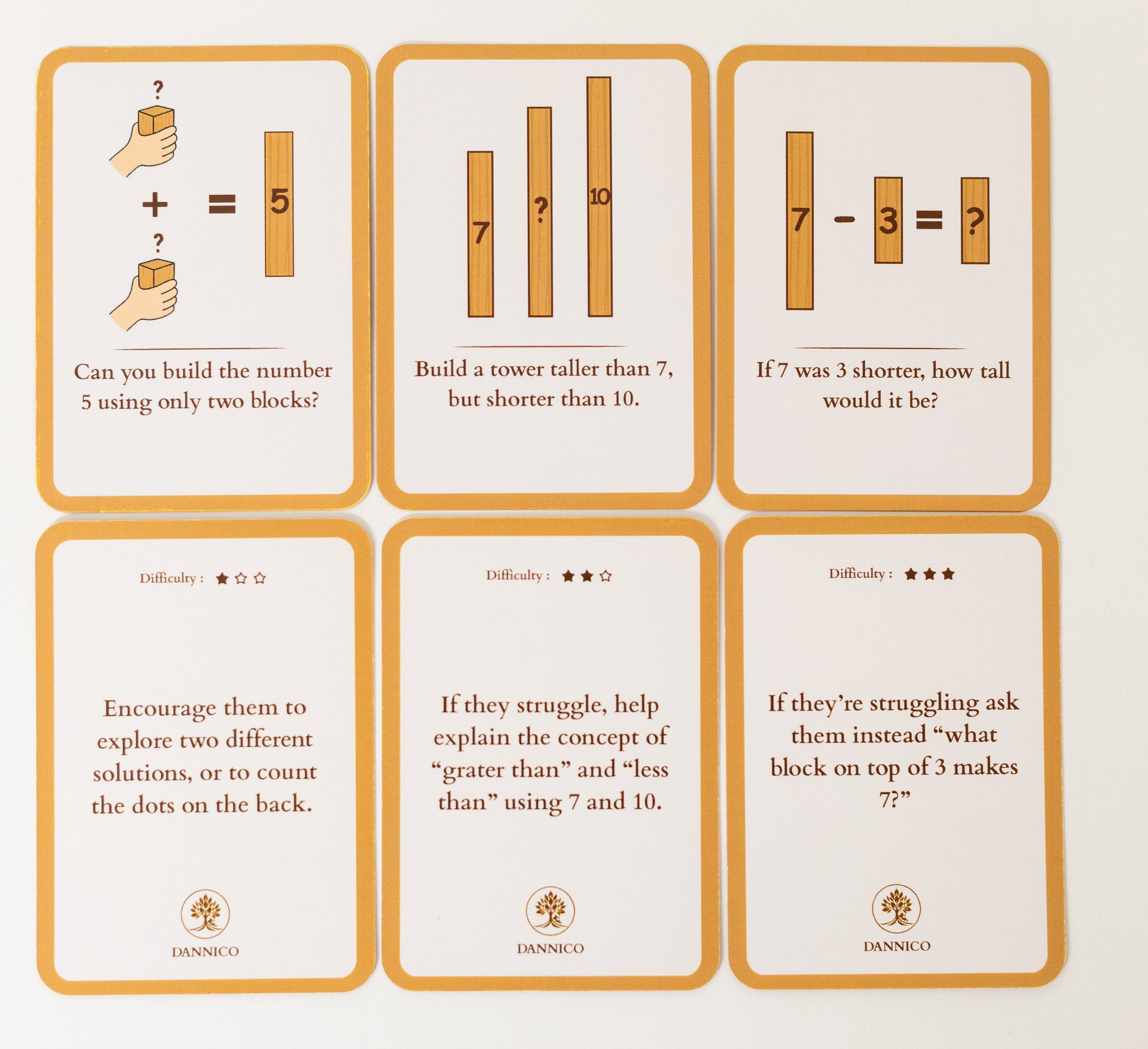
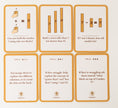
20 double-sided flashcards: A prompt for the child on one side, guidance for the adult on the other, in three levels.
in stock
30 day returns
Store pickup unavailable
Free shippingShips in 1 business day
30-day returns99.6% of families keep it
Made in TexasHandcrafted in San Antonio
Solid beechwoodHand-sanded, unfinished
What's included
21 Wooden Number Blocks: 5 × one, 4 × two, 3 × three, 2 × four, 2 × five, and 1 each of six, seven, eight, nine, ten
20 Double-Sided Activity Cards
Dimensions
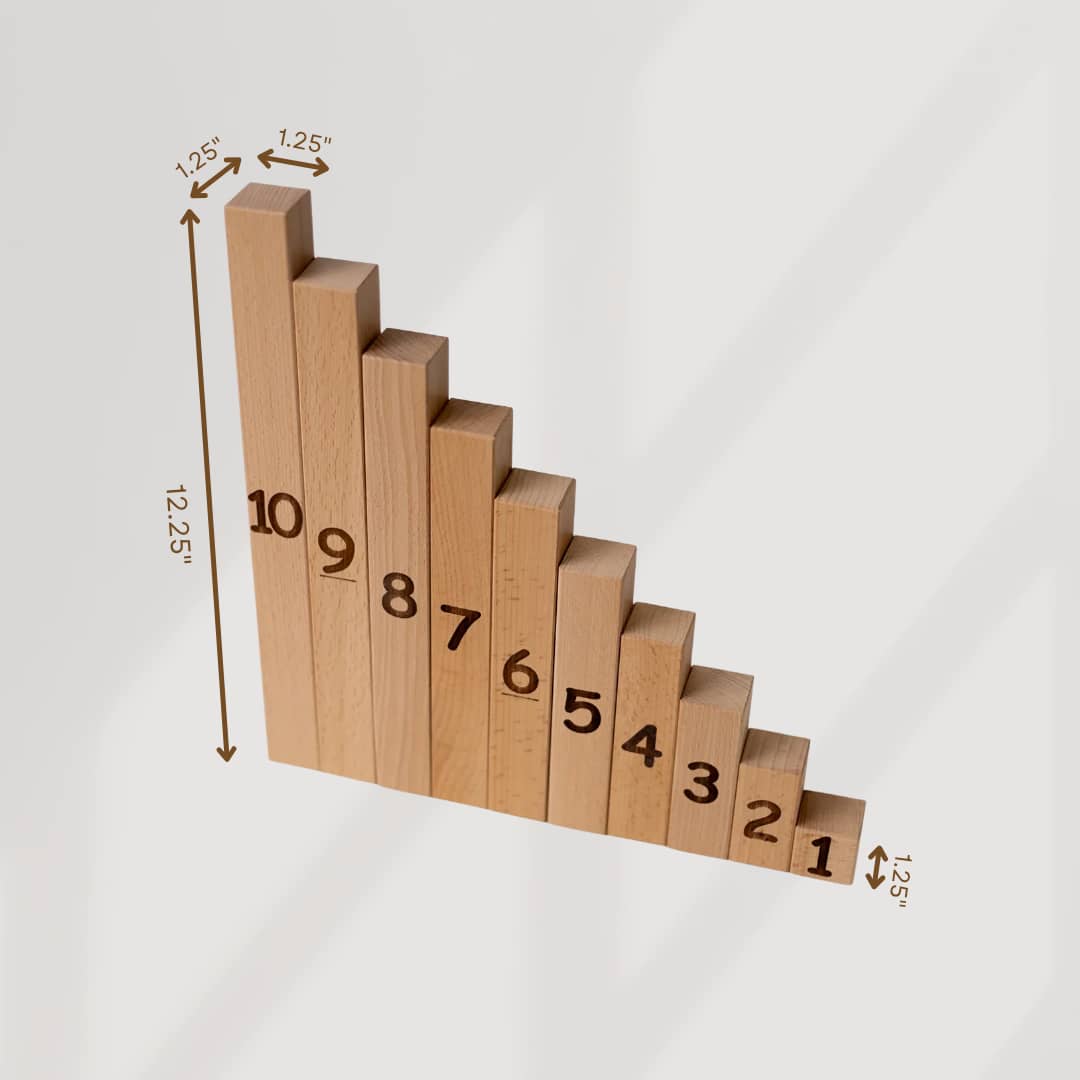
1.25” × 1.25” base, the bigger the number, the taller the block
Material & Care
Solid beechwood, hand-sanded with rounded edges and left unfinished: no top coat, paint or stickers. The flashcards are printed on thick cardstock with rounded corners. To clean, wipe the blocks with a damp cloth and let them dry.
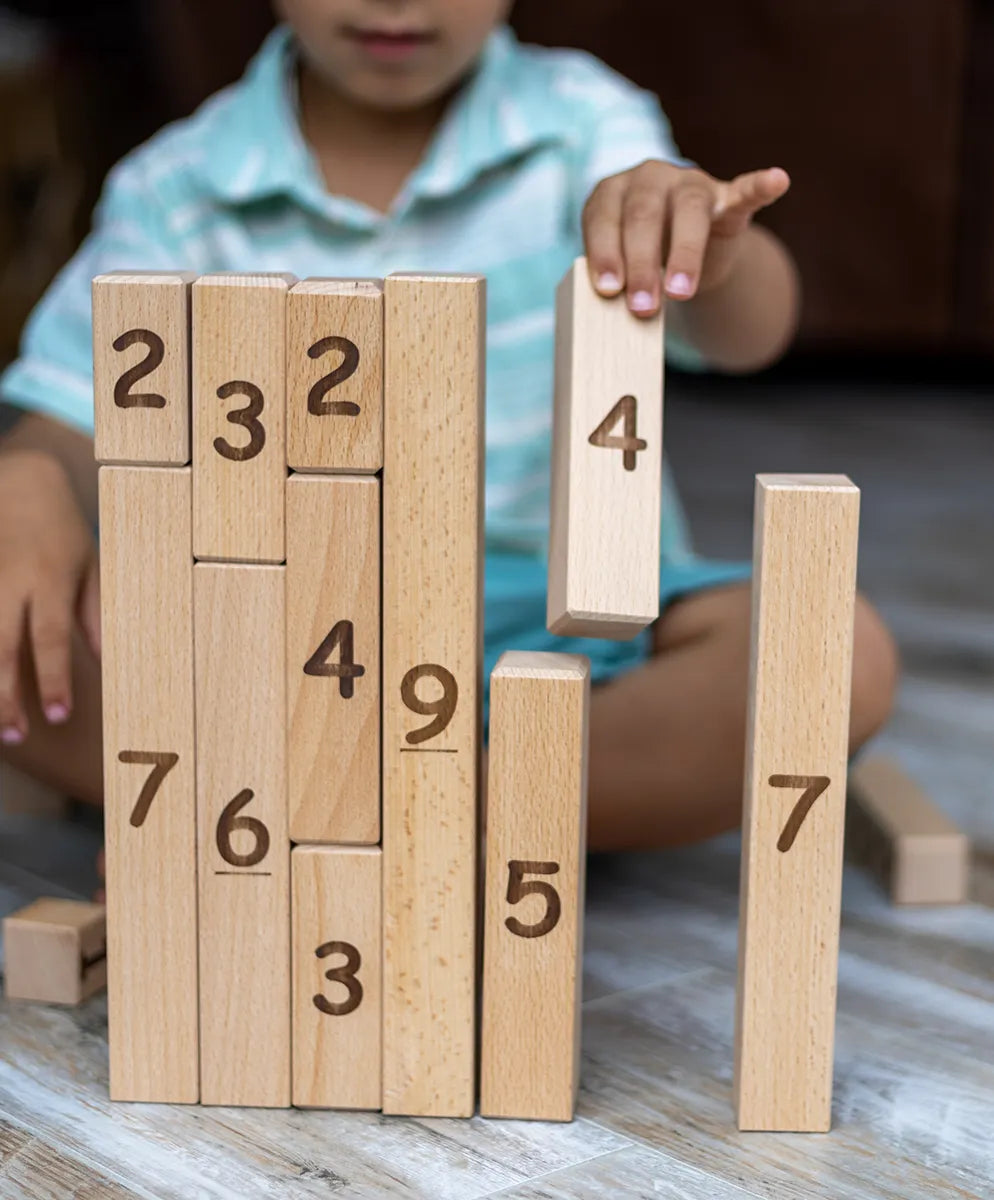
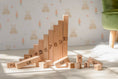
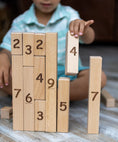
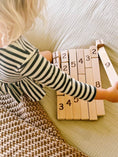
Each of the 21 beechwood blocks is sized to match its number. Little ones can see and feel the difference between 2 and 5, line blocks up to compare them, or stack a 2 on a 3 and find it reaches the height of a 5.
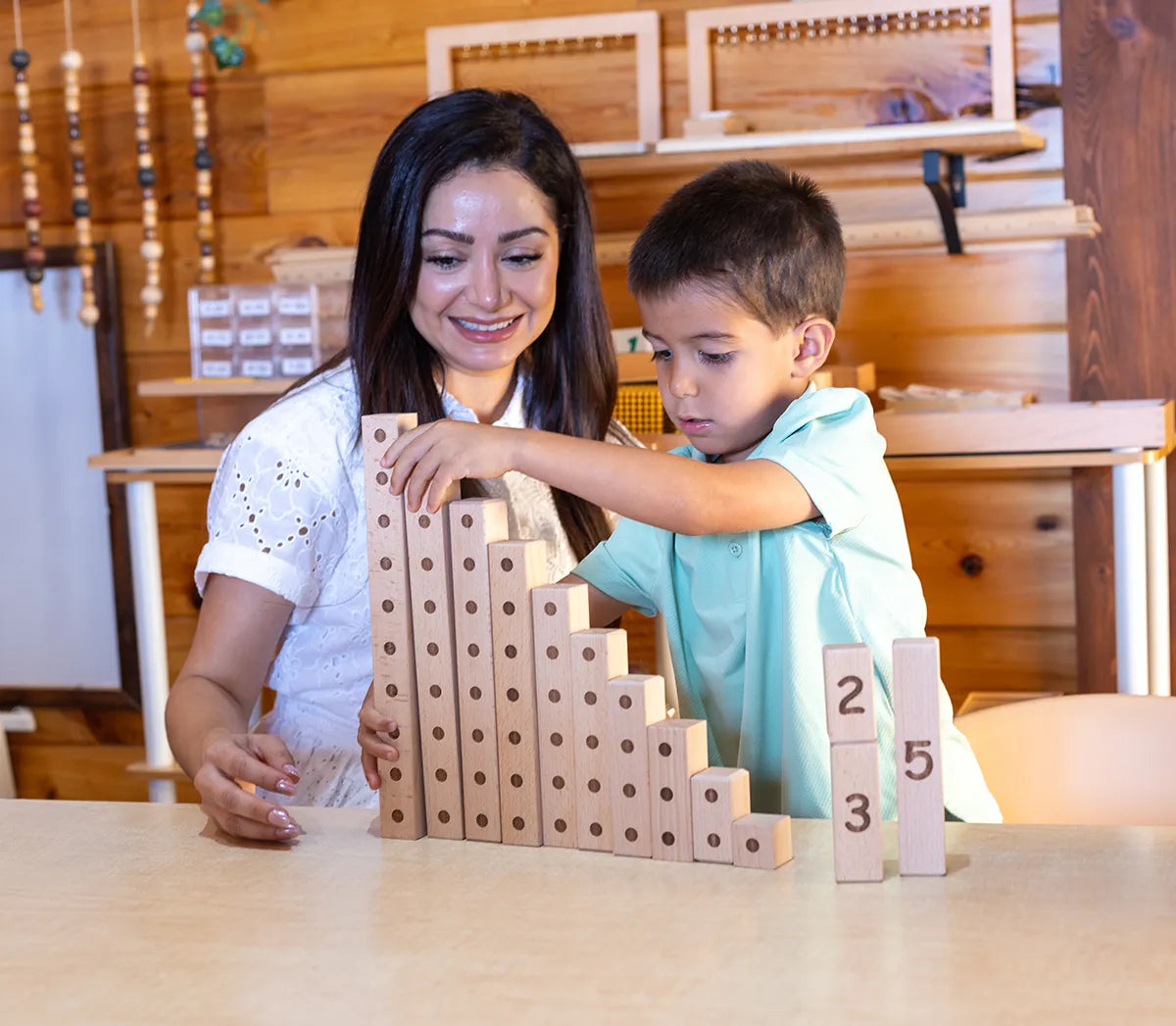
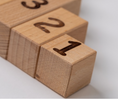
Each block has a laser-engraved numeral on the front and engraved counting dots on the back. Children trace the shape of the number and count the dots, so the symbol and the quantity stay connected.
Two plus three stacks to the height of five. No explanation needed.
More wood, more play
Thick blocks, made to last
Solid beechwood
Each of the 21 blocks is cut from solid beechwood, never hollow, and hand-sanded smooth with rounded edges. The wider base makes stacking steadier for small hands.
Laser-engraved details
The numerals and dot patterns are engraved into the wood, not painted or stickered, so they won't fade or peel. Engraving also adds touch: children feel the shape of each number and the outline of each dot.
Nothing to distract
Natural wood, no loud colors and no gimmicks. Reach & Count looks as good on the shelf as it does in play, and the focus stays on the numbers.
20 flashcards
Three levels, one set
Twenty double-sided cards come in the box: a child-friendly prompt on one side, and guidance for the parent or teacher on the other. Start at the level that fits and move up as the blocks become familiar.
The three levels
1Beginner · 7 cardsAddition with numbers up to 10.
2Intermediate · 6 cardsGreater than, less than and equal to.
3Advanced · 7 cardsAddition beyond 10, subtraction and early multiplication.
The cards are printed on thick cardstock with rounded corners.
Who it's for
For homes, classrooms and therapy rooms
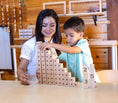
Reach & Count invites children from about age 3 to explore early math and problem-solving through play, screen-free. Stacking can start around age 2.
Parents who want Montessori-aligned, natural math play at home.
Teachers looking for a durable, simple classroom math tool.
Therapists supporting fine motor development through tactile play.
Sized to the number
One base, ten heights
Each block · base
1.25″
Width
1.25″
Depth
× the number
Height
Every block stands on the same 1.25-inch square base, and the bigger the number, the taller the block. A 1 is one unit high and a 10 is ten, so the heights add up the way the numbers do: 2 + 3 stacks to the height of 5.
The 21 blocks and 20 cards come in one box, small enough to live on a shelf between sessions.
Material & care
Beechwood, left natural
The blocks are solid beechwood, chosen for its smooth, closed grain and its weight in the hand. Each one is cut, engraved and hand-sanded in our San Antonio workshop, with rounded edges, and left unfinished: no top coat, no paint and no stickers.
To clean, wipe with a damp cloth and let the blocks dry.
The flashcards are thick cardstock with rounded corners; keep them in the box between sessions.
There are 21 number blocks (5 × one, 4 × two, 3 × three, 2 × four, 2 × five, and 1 each of six, seven, eight, nine, ten), plus 20 flashcards.
How many flashcards are included in each difficulty level?
There are 20 flashcards in total: 7 beginner, 6 intermediate and 7 advanced.
What does each difficulty level focus on?
The beginner cards focus on addition with numbers up to 10. The intermediate level introduces comparison: greater than, less than and equal to. The advanced cards build on that with addition beyond 10, subtraction and early multiplication.
What age group are these number blocks best suited for?
Each child develops at their own pace, but stacking blocks can be introduced as early as age 2. For exploring early math concepts, the set is best suited for ages 3 and up.
Can these wooden blocks be used for Montessori-style learning?
Yes. The blocks are sized to their number and engraved rather than printed, which suits hands-on exploration, fine motor work and self-directed discovery.
Have these blocks been finished with a top coat?
No. The blocks are left in their natural state with no top coat, paint or stickers. Beechwood has a smooth, closed grain, and each block is hand-sanded with rounded edges.
How do number blocks support early math skills?
Because each block is as tall as its number, children can see that 2 + 3 stacks to the height of 5. The engraved numeral on the front and the dots on the back connect the symbol to the quantity. Read about the benefits Montessori math blocks can bring your child.
Are the numbers and dots printed or engraved?
The numbers and dots are laser-engraved, so they won't fade or peel, and children can feel the shape of each number and the outline of each dot.
Can my child play with the number blocks independently?
Yes. The blocks and flashcards are designed for children to use on their own, at their own pace, with a parent prompt on the back of each card for when you join in.